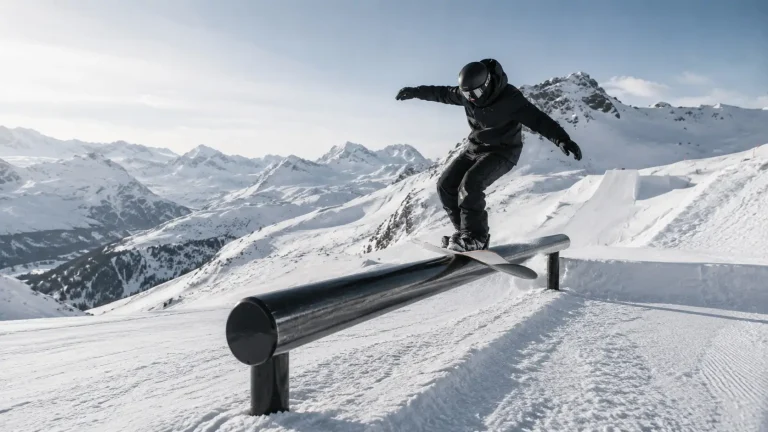
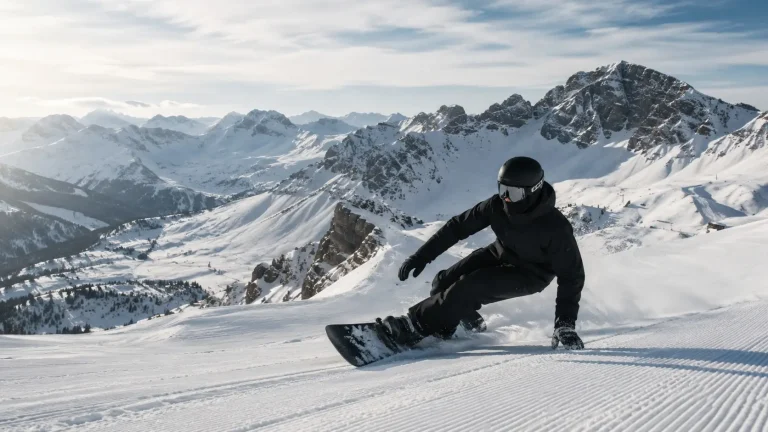
Here is the 30-second answer: if you wear men’s US 10.5 / EU 44 or bigger, test a wide snowboard — and whatever you buy should leave about 1–2 cm of boot overhang on each edge, no more. Get that number right and you unlock cleaner carves, real float in powder, and no more toe drag. Get it wrong and every groomer lap feels like riding with the parking brake on.
Waist width is the most ignored number in snowboarding — and the most consequential for riders with bigger feet, heavier builds, or powder habits. This is the complete 2026 guide to choosing a wide board: the test, the chart, the mistakes, and the boards that do it right.
What “Wide” Actually Means: One Number, Three Categories
Every snowboard has a waist width — the measurement across the board’s narrowest point, at the middle, running edge to edge. Regular men’s boards typically sit between 24.5 and 25.4 cm. From there, the industry splits into bands, and the rule of thumb is simple: anything over roughly 25.4 cm (10 inches) is considered wide.
| Category | Waist width | Who it fits |
|---|---|---|
| Regular | 24.5–25.4 cm | Men’s boots up to about US 10 / EU 43 |
| Mid-wide | 25.5–26.0 cm | US 10–11 / EU 43–44.5, heavier riders |
| Wide | 26.0 cm+ | US 11+ / EU 45+, big-feet freeriders, powder specialists |
Women’s boards follow the same bands one size down — a women’s “wide” or a men’s mid-wide is usually the right home for women’s boots above US 10 / EU 43.
The 30-Second Test: Do You Need a Wide Board?
- Boot-size check. Men’s US 10.5 / EU 44 or bigger means you should be riding mid-wide or wide. At US 12 / EU 46 and up, a wide is almost certainly the right call. This single check decides it for most riders.
- Overhang check. Stand on the board (or strap in) and look down: your boots should overhang each edge by roughly 1–2 cm. Much more and boot-out is stealing your leverage; noticeably less and you can look at a wider deck for more float and power.
- Drag symptoms. If your toes or heels scrape hard during turns, if carving feels like tipping over a fence, or if you can feel boots catching on more aggressive edge angles — that is boot-out, and the fix is width.
- Weight check. Riders around 190 lb / 86 kg and up get real benefits from extra width in soft or deep snow: more surface area means more float and less sinking. But for everyday all-mountain riding, boot size still decides.
Boot Size to Board Width: The Full Chart
Find your men’s boot size (women’s riders: subtract about 1.5 sizes to convert), then match the band. If you land between two, choose based on conditions you ride most — wide if you chase powder, mid-wide if you stay on groomers.
| Men’s US boot | EU | What to ride | Look for |
|---|---|---|---|
| 7–9.5 | 39–42.5 | Regular | Any standard width — turn speed is your friend |
| 10–10.5 | 43–44 | Regular-long or mid-wide | Mid-wide waist (25.5–26 cm) |
| 11–11.5 | 45–45.5 | Mid-wide / wide | Waist from 25.8 cm and up |
| 12–13 | 46–48 | Wide | Waist 26 cm+ — full wide territory |
| 13.5+ | 48.5+ | Wide, widest available | Pick from the widest size in the run |
Who Actually Needs a Wide Snowboard — and Who Doesn’t
- Big-footed riders (US 10.5+ / EU 44+): you are the core case. Boot-out robs your edge grip long before your skill runs out, and a properly sized wide board gives it back.
- Heavy riders: more mass presses the board into the snow; extra width adds float and keeps you from sinking on soft days, even with average boot size.
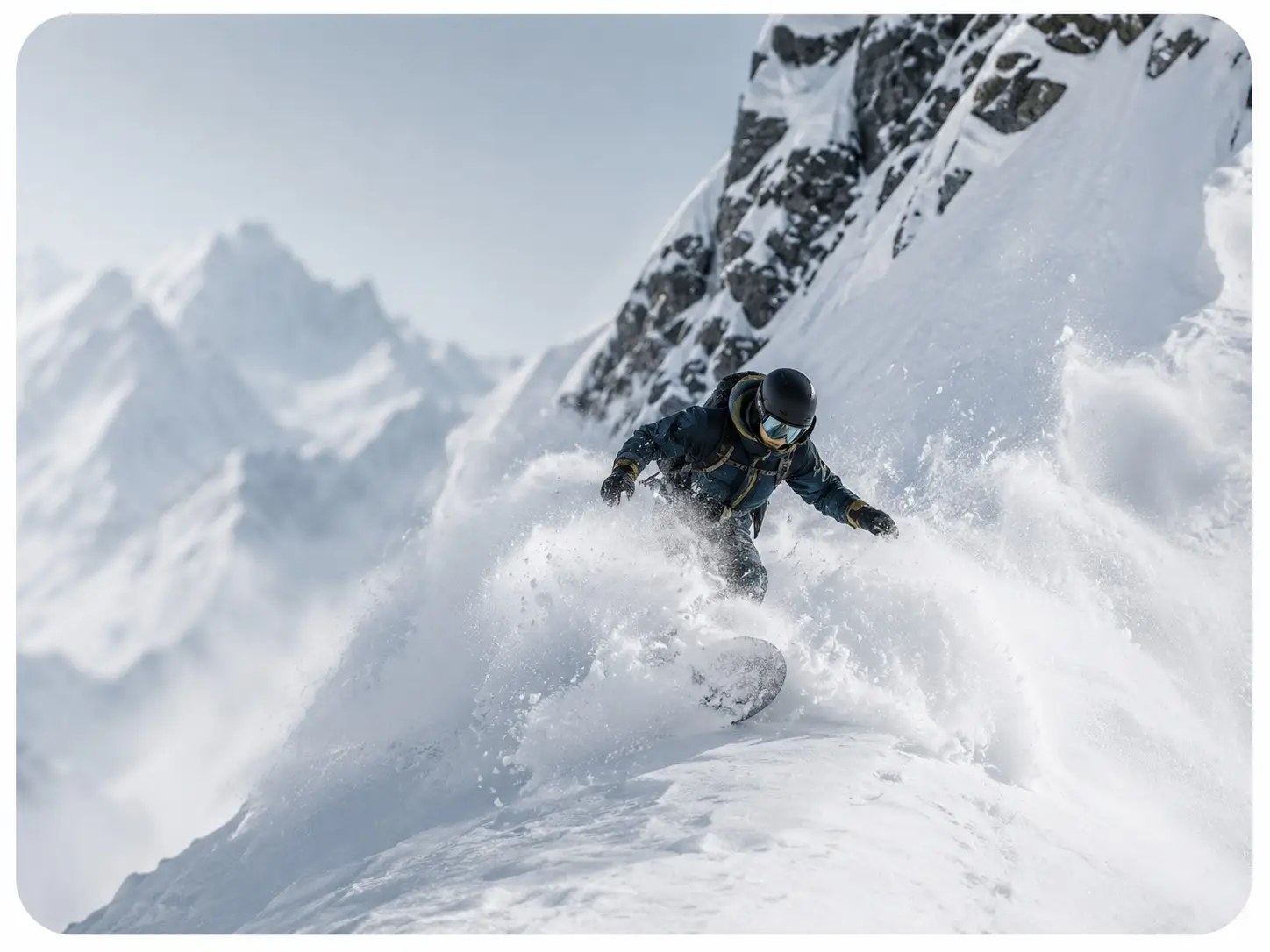
- Powder and freeride specialists: width is float, and float is the whole point in deep snow — pair it with a tapered or swallowtail shape for maximum effect.
- Usually not: smaller-footed groomer riders. Up to men’s US 9.5 / EU 42.5 with a normal weight, a regular-width board is livelier, faster edge to edge, and more fun. Width is a tool for a specific fit — not an upgrade.
Common Wide-Board Mistakes
- “Sizing down” in length to compensate. Never trade length for width. Board length is set by weight; width is set by boots. Shrinking one to get the other just gives you a board that is wrong in two directions.
- Going wider than you need. An over-wide board is slower edge to edge and feels lazy on groomers. Ride the narrowest width that clears your boots properly.
- Ignoring angle and overhang. A slightly steeper duck stance trims overhang without costing much — but it cannot fix a board that is genuinely too narrow. Roughly 1–2 cm of overhang per edge is the target either way.
- Forgetting the flex pairing. Wide boards should be matched to a flex that suits the rider’s weight — heavier riders should lean stiffer, and our guide to snowboard flex ratings explains exactly how to choose.
ASPECT’s Wide-Capable All-Mountain Lineup
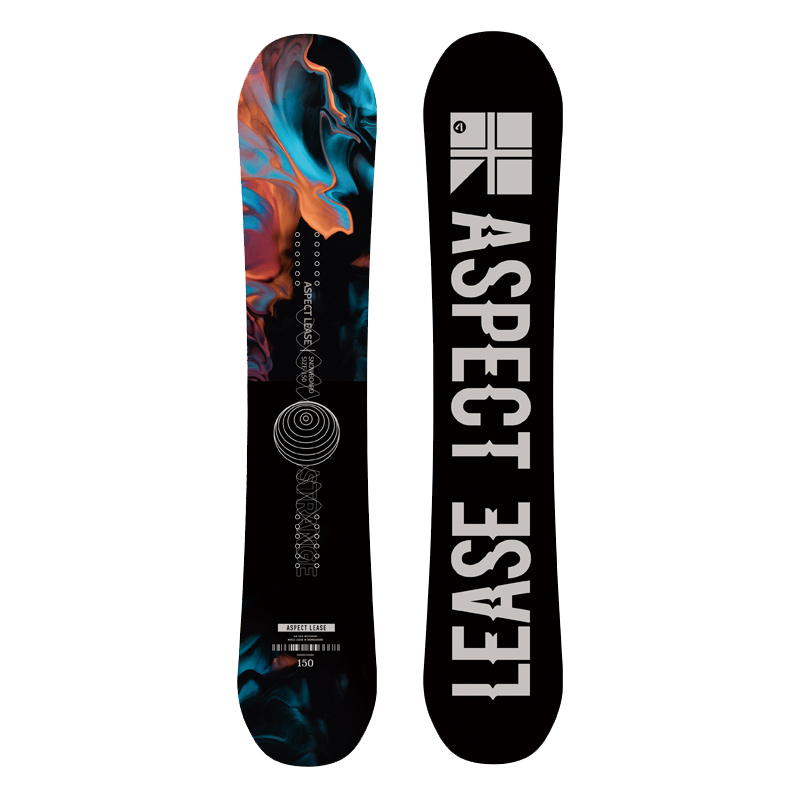
Extra width without the sluggish feel — three ASPECT models run wide sizes, so bigger-footed and heavier riders get a board that actually matches instead of compromising:
- ASPECT 24A05 — $339.99: the wide specialist. Four lengths up to 165W with a 5–6 flex, built for bigger riders and deep days — an eco composite core and triaxial fiberglass keep it light underfoot.
- ASPECT 24A02 — $309.99: the versatile middle. Five lengths from 142 to 162W with a relaxed 4–6 flex — forgiving enough to learn on, stable enough to grow into.
- ASPECT 26A03 — $309.99: seven lengths starting at 115W, so smaller and mid-weight riders get a properly matched platform instead of a compromise — a forgiving 4–5 flex for the whole mountain.
- ASPECT 26A04 All-Mountain Twin — $339.99: 13 lengths from 80 to 165W — one model that covers the widest size range of anything we make, twin-tip and park-to-powder ready.
Every board carries a 2-year warranty, a 30-day ride guarantee, and free shipping over $150. Pair your pick with the ASPECT size guide to lock in the length, and our powder riding guide if float is the mission.
Frequently Asked Questions
Do I need a wide snowboard?
If you wear men’s US 10.5 / EU 44 or larger boots, yes — a wide or mid-wide board will fix boot-out and give you back edge leverage. Check the overhang: with boots strapped in, you want about 1–2 cm of overhang past each edge.
What waist width is considered wide?
Industry rule of thumb: anything above roughly 25.4 cm (10 inches) is wide. Mid-wide sits around 25.5–26.0 cm, and full wide starts at 26 cm and up. Regular men’s boards run about 24.5–25.4 cm.
Can I ride a wide snowboard with small feet?
You can, but you probably shouldn’t choose one. With boots up to about US 9.5 / EU 42.5 and average weight, a wide board feels slower edge to edge with no real benefit. Heavier riders are the exception — weight benefits from float even with average feet.
Are wide snowboards better in powder?
Yes — extra width creates more surface area, which means more float and less sinking. Pair a wide board with a setback stance or a tapered swallowtail shape and deep days get dramatically easier. The complete powder guide covers the technique side.
Is a wide snowboard harder to ride?
Slightly — wider boards take a bit more effort to move edge to edge and feel less twitchy underfoot. For riders who actually need the width, the trade is worth it: better leverage, better float, and no boot-out. If you don’t need it, stay regular and enjoy the quicker turn-in.
Ride the Right Width This Season
Check your boot size, check your overhang, and pick the narrowest board that clears your feet. Big-footed or heavy? Start with the 24A05 (up to 165W) or the all-range 26A04, and confirm the length with the size guide. Still deciding on the fundamentals? The complete buying guide covers everything from profile to price.
Discover more from ASPECT Snowboards
Subscribe to get the latest posts sent to your email.