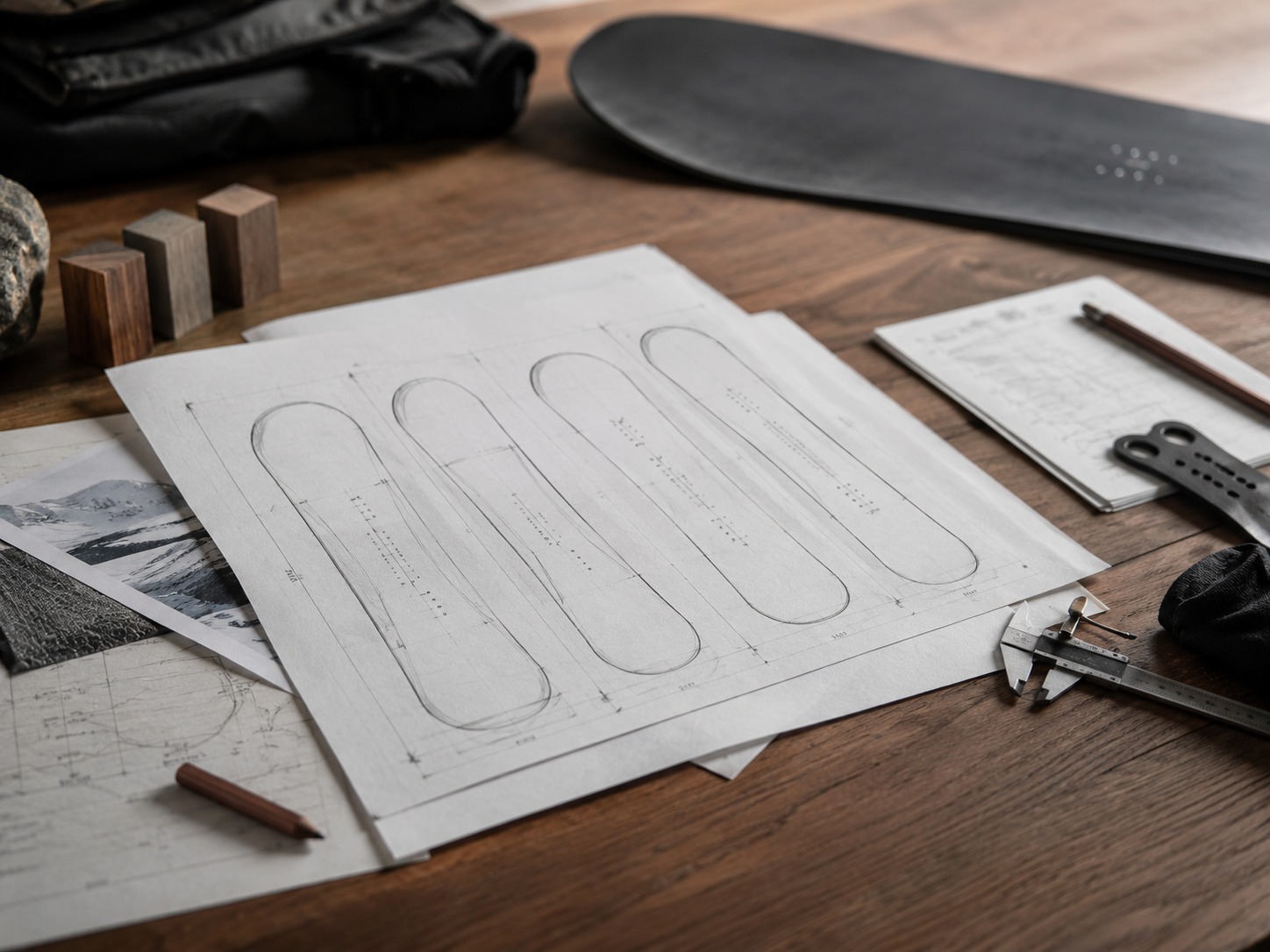
A complete guide to finding the right shape, flex, and size for how you ride.

Your First Snowboard: Where to Start
Walking into a shop (or scrolling through pages online) can be overwhelming. There are camber profiles, flex ratings, shape variations, size charts — it is a lot. But choosing your first board does not have to be complicated. Here is what actually matters.
1. Size: Get This Right First
Your weight is the most important factor in board sizing, not your height. A board that is too long will feel difficult to turn; too short and it will feel unstable at speed. As a general rule, a board should come somewhere between your chin and nose when stood on end. For all-mountain riding, aim for the middle of the recommended weight range on the board specification.
Most manufacturers provide a weight range for each board length. For example, a 155cm board might be rated for 65-80kg riders. If you are at the upper end of a size range, consider going up a length for better stability. If you are at the lower end, a shorter board will be easier to manipulate. Do not ignore these ranges — they are based on real physics and performance testing.
2. Shape: Directional vs Twin
Directional boards have a longer nose and shorter tail, designed for riding forward. They excel in powder and at speed. Twin boards are symmetrical, perfect for park riding and switch. For your first board, a directional twin (slightly directional but rideable switch) is the most versatile choice.
Directional boards typically feature a setback stance — meaning the bindings are positioned slightly toward the tail, making it easier to keep the nose up in powder. Twin boards have a centered stance, ideal for riding switch (backward) and executing spins in the park. If you know you will spend most of your time in the park, go twin. If you are exploring the whole mountain, a directional twin gives you the best of both worlds.
3. Flex: Soft vs Stiff
Flex is rated 1-10. Beginners should look for a 3-5 flex — soft enough to be forgiving when learning turns, but stiff enough to provide stability as you progress. Softer flex makes it easier to press and butter; stiffer flex gives you power at speed and in carve.
Flex rating is not standardized across brands — a 5 from one manufacturer might feel like a 4 from another. If possible, try to flex the board in the shop before buying. Press down on the nose and tail to feel the resistance. A board that flexes evenly through the middle is generally more forgiving, while a board that flexes primarily in the tips offers more torsional rigidity for carving.
4. Camber Profile
Camber (traditional arch shape) gives you pop and edge hold but is less forgiving. Rocker (banana shape) is easier to turn and floats better in powder but washes out on hardpack. Hybrid profiles combine the best of both — the most common recommendation for first-time buyers.
Modern snowboards use a variety of hybrid profiles. A common configuration is rocker between the feet with camber underfoot and at the contact points. This gives you the playfulness of rocker for turns and powder, with the edge hold of camber when you need to dig in on hardpack. ASPECT boards use a refined hybrid profile that balances these characteristics for real-world riding conditions.
5. Width: An Overlooked Factor
Board width matters more than most beginners realize. If your boots overhang the edge significantly, you will drag your toes or heels during turns — a frustrating experience called boot drag. As a rule of thumb, if you wear US size 10.5+ shoes, look for a wide or mid-wide model. The waist width should be at least 254mm for size 10 boots, increasing proportionally for larger feet.
The Verdict
For 90% of first-time buyers, a directional twin with hybrid camber and a 4-5 flex in the correct size for your weight will give you the best all-around experience. From there, the mountain will teach you what you want in your next board. Start with versatility, ride it in every condition you can find, and pay attention to what feels right. Your second board will be easier to choose because you will know your riding style by then.
Browse the ASPECT collection to find boards that match these criteria, or visit our size guide for personalized recommendations based on your height, weight, and riding goals.
Discover more from ASPECT Snowboards
Subscribe to get the latest posts sent to your email.